The AI Resistance
I've been having a lot of conversations lately about AI at work. And there's a pattern I keep seeing: some people light up immediately, start experimenting, find ways to weave it into their day. Others cross their arms, get quiet, or push back hard.
I used to think it was just curiosity. Some people are wired to try new things; others aren't. But the more of these conversations I have, the more I realise that explanation is too easy. Something deeper is going on.
It's not about the technology
Here's what I've come to understand: when someone resists AI, they're rarely resisting the tool itself. They're responding to what the tool represents.
Our brains are efficiency machines. We build routines, we develop expertise, we create shortcuts that let us do our work without burning through cognitive energy. Change disrupts all of that. And not in a small way. It triggers the threat-detection system (fight-or-flight) for them.
There are real, human concerns underneath the resistance:
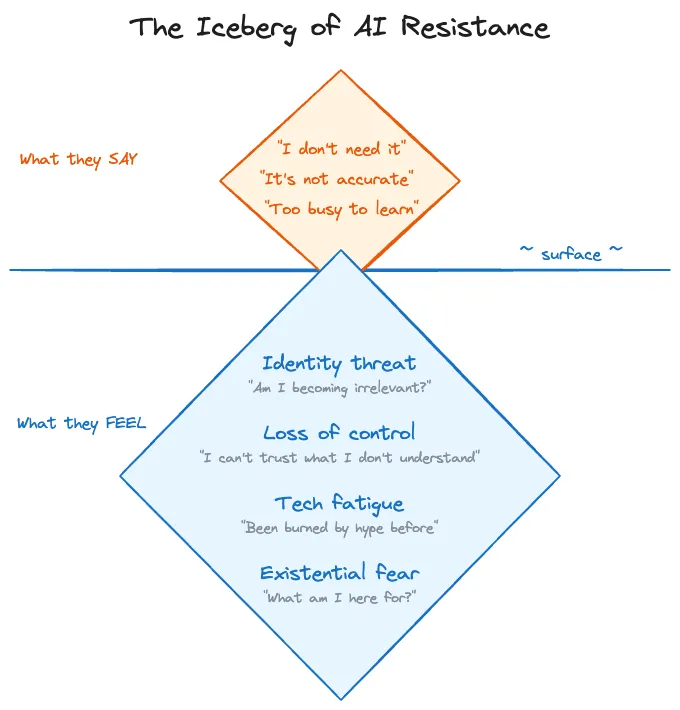 Excuses people give for avoiding AI (eg. "I don't need it," "it's not accurate," "too busy to learn") are just the tip. Underneath sit the real drivers: identity threat, loss of control, tech fatigue, and the quiet fear of irrelevance.
Identity threat. If they've spent fifteen years becoming excellent at something, hearing "AI can do that now" doesn't feel like empowerment. What they hear is "your expertise is becoming irrelevant" (even when that's not what you're saying).
Loss of control. Relying on something they do not fully understand, especially when they are accountable for the output, feels genuinely risky to them. And for many people, if their name is on the work, they can't tolerate it.
Tech fatigue. Most professionals have lived through multiple waves of "this changes everything" only to watch tools get abandoned, or create more busywork. This creates scepticism.
The quiet fear. The one people rarely say out loud: "If AI does my job better, what am I here for?" This is more of an existential question (and insecurity, because they do not understand the technology itself).
Why some people embrace AI easily
The people who jump in early aren't necessarily smarter or braver. They often just have a different relationship with their professional identity. They see themselves as problem-solvers who happen to use tools, rather than specialists defined by a specific process. When a new tool appears, it doesn't threaten who they are. It expands what they can do.
They also tend to have a higher tolerance for uncertainty. Their dopamine systems respond to novelty with excitement rather than anxiety. And many of them have a track record of navigating change successfully, which builds a kind of confidence: "I've figured out new things before, I'll figure this out too."
So, how to help them who fear the AI change?
Here's what I've found works when talking to people who are hesitant:
Don't sell transformation. The bigger you make AI sound, the more threatening it becomes. "This will revolutionise how you work" is the worst possible pitch to someone who's already anxious about relevance. Instead, frame it small: "This can handle the tedious part of your job you always complain."
Show, don't tell. A five-minute showing them practical use of AI using their actual work is worth more than an hour-long presentation about AI capabilities. People need to see (and experience) it themselves.
Acknowledge what's underneath. If someone is pushing back, they probably have a legitimate concern they're not voicing. Create space for that. "What would worry you most about using this?" gets further than "Here's why you should try it."
Let them keep control. Position AI as something that drafts, suggests, and assists. Not something that decides. The moment people feel they're being replaced rather than augmented, then you've lost them.
Respect the timeline. Not everyone needs to adopt at the same speed. The person who takes three months to start using AI but then uses it thoughtfully and sustainably is more valuable than someone who jumps in day one and burns out on bad prompts and frustration.
Imposed change vs. invited change
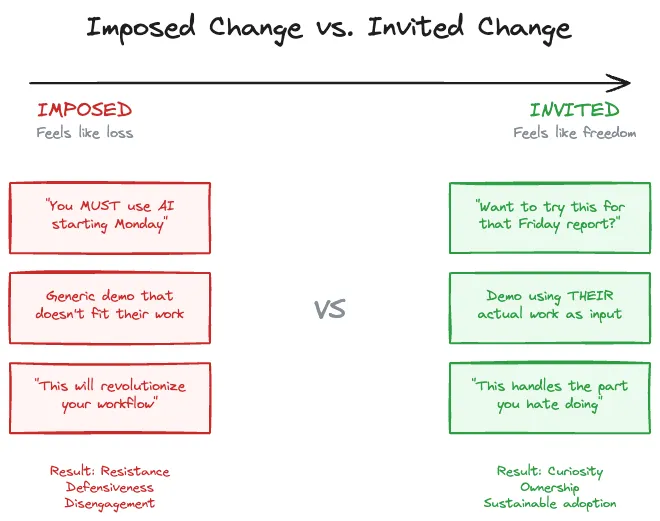 Contrast between imposed change and invited change
The biggest thing I've learned from these conversations: chosen change feels like freedom, but imposed change feels like loss. The people who love AI chose to explore it. The people who resist it often feel like it's being pushed on them.
If you want to help someone adopt AI, your job isn't to convince them the tool is good. It's to give them enough safety and autonomy that they can choose it for themselves.
The shift "from mandate to invitation" changes everything.